Disciplinary actions like suspension or expulsion can permanently change the trajectory of a student’s life. That’s why schools are legally required to follow due process—the right to fair notice, a meaningful opportunity to be heard, and protections against arbitrary decisions.
But what if those rights are ignored?
As a student rights attorney, I often help families figure out how to know if your child was denied due process in a disciplinary case. If your child was punished without a fair hearing, without a chance to respond, or based on faulty evidence, the school may have violated the law—and you may have grounds to appeal.
What Is “Due Process” in School Discipline Cases?
Due process refers to the legal protections students are entitled to before being removed from school. The exact requirements depend on the severity of the punishment:
- Short-term suspensions (10 days or fewer):
- The student must receive notice of the charges and a chance to respond.
- Long-term suspensions and expulsions (more than 10 days):
- The student is entitled to a formal hearing, often called a tribunal hearing in Georgia.
- You must receive advance written notice.
- Your child must have the opportunity to present evidence, call witnesses, and be represented by a lawyer or advocate.
If the school did not follow these steps, that is a due process violation.
How to Know If Your Child Was Denied Due Process
Here are the most common red flags that your child may have been denied due process in a school discipline case:
1. You Were Not Notified of the Charges
- You did not receive written notice of the alleged conduct or hearing date.
- You found out after your child had already been removed from school.
2. Your Child Was Disciplined Without a Hearing
- The school imposed a long-term suspension or expulsion without offering a hearing.
- You were told you “did not need to attend” or that the hearing was just a “formality.”
3. You Were Prevented From Participating Meaningfully
- The hearing was rushed or you were given less than 24 hours’ notice.
- You were not allowed to bring an attorney, advocate, or present your child’s side.
4. Evidence Was Withheld or Incomplete
- The school refused to provide access to the incident report, statements, or video footage.
- You were not told who the witnesses were or allowed to question them.
5. Bias or Prejudice Affected the Outcome
- The hearing officer had a conflict of interest.
- The outcome appeared pre-decided regardless of what your child said.
- The panel refused to consider your child’s disability or individual circumstances.
Special Protections for Students With Disabilities
If your child has an IEP or 504 Plan, they are entitled to additional procedural safeguards. Before being removed from school for more than 10 days, the school must hold a Manifestation Determination Review (MDR) to determine:
- Was the behavior caused by or directly related to the child’s disability?
- Did the school fail to implement the IEP or 504 Plan?
If the answer to either question is yes, the school cannot proceed with expulsion.
Failing to hold an MDR, or holding one without following the proper legal standard, is a clear denial of due process under the Individuals with Disabilities Education Act (IDEA).
What Should You Do If You Suspect a Violation?
If you believe your child was denied due process, you have several options:
- File an appeal of the tribunal decision with the Local or State Board of Education.
- Request a due process hearing if your child has a disability and IDEA violations occurred.
- File a state complaint with the Georgia Department of Education.
- Challenge the evidence used and request a hearing transcript.
- Consult with a school discipline attorney or special education attorney to review the facts and prepare a legal response.
Why Due Process Matters
Due process is more than a procedural box to check. It is a fundamental legal protection that ensures:
- Your child is not unfairly punished
- The punishment fits the facts and circumstances
- Bias, assumptions, or rushed decisions do not dictate your child’s future
When due process is denied, the outcome is often excessive, unsubstantiated, and deeply damaging.
The Hull Firm Can Help
At The Hull Firm, we fight for students who were removed from school without proper notice, hearings, or legal protections. We represent families across Georgia in:
- Discipline appeals
- Tribunal hearings
- Due process complaints
- MDRs and special education disputes
We serve students in Atlanta, Athens, Columbus, Augusta, Macon, Savannah, and virtually across the state.
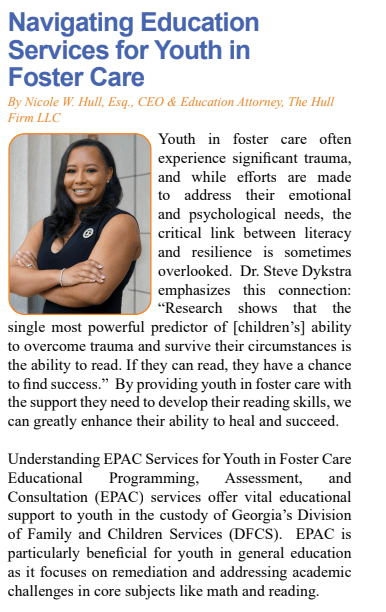
I am Nicole Hull, the Cool Kids Advocate, and I am committed to ensuring that no student loses their education because the system failed to follow the law.
Take the First Step
If you are wondering how to know if your child was denied due process in a disciplinary case, start by trusting your gut—and then reach out for help.
Schedule your free discovery call at www.thehullfirmllc.com or call (706) 388-5330. Let’s stand up for your child’s rights—together.